For survivors of childhood abuse, coercive control or neglect, childhood may not be a period of safety and belonging. Instead, it may be something to be endured until they are finally able to leave. Turning 18 can represent a light at the end of the tunnel, an amnesty after an 18 year sentence, perhaps the first time to experience dignity and be treated as a human being.
However, legal adulthood does not mean that a controlling parent will voluntarily relinquish control. Some parents may respond to an adult child's departure with threats, intimidation, attempts to discover their whereabouts, or misuse of missing person reports and guardianship claims to compel their return. Turning 18, getting a new phone number, moving to another state, and legally changing your name may not be enough to protect an adult from a determined parent.
A robust legal and social process for an adult child to permanently end their relationship with a parent could provide protection in these cases - not merely "becoming estranged" or "going no contact", but a legally enforced right to move on and build an independent life without an unwanted relationship following them.
Where "estranged" describes a state of separation, "ex-child" would describe a relationship that has been deliberately and permanently ended.
That difference could matter socially and legally. Someone saying:
"I'm estranged from my father."
or
"I'm estranged from my mother."
or
"I'm estranged from my parents."
can leave the listener wondering, "Are you hoping to reconcile someday?" or "Maybe you'll talk again eventually."
Whereas:
"He's my ex-father. I'm his ex-son."
or
"She's my ex-mother. I'm her ex-daughter."
or
"They're my ex-parents. I'm their ex-child."
communicates something much more definitive: the relationship is over, and reconciliation isn't an implied goal.
In essence, it expresses:
"I was born this person's child, but I have terminated that relationship and am no longer legally claimed as their child."
How might this process work in practice?
At 18, an adult child could formally declare: "I am an adult. I voluntarily terminate my legal parent-child relationship with X."
This could be through a court order or a simple administrative declaration witnessed by a lawyer, social worker or other professional - much like a formal notice of no contact.
The sole requirement would be that the adult is acting of their own free will and understands the consequences, similar to the role of informed consent in healthcare. Analogous to no-fault divorce, the former parent would have no right to veto, appeal, or otherwise revoke or prevent the severance.
The intent is not to give courts discretion over whether an adult has "suffered enough" to deserve freedom from a parent or whether a parent has a "legitimate interest" to continue to have access to their adult child.
The foundation of a unilateral no-fault exit right is as follows: a continued relationship requires mutual consent from both sides, and ending your participation in it does not require the other person's agreement.
After severance - or "unilateral no-fault termination of parental rights" by the adult child - the following would apply:
The court would terminate all special legal privileges arising from parentage. The former parent would then be treated like any other person - essentially as a "stranger who happens to share DNA".
In the case where a guardianship is determined necessary by independent legal experts - not by the parent's own testimony - the adult would be able to choose a guardian of their choice who would not cooperate with or disclose information to the adult's former parents. Parents and biological relatives would not have any claim over the adult. This means that people with support needs could receive support from a self-chosen guardian such as a social worker, nurse or NGO, and birth parents could not abuse the guardianship system to retain access to their adult child against the adult's will.
If the ex-parents:
the fact that they were the adult's birth father or birth mother wouldn't give them an exemption. If it would be regarded as harassment, slander, abuse, stalking, social engineering, kidnapping or false imprisonment if committed by a stranger or ex-partner, it would be similarly regarded as such if committed by an ex-parent.
Sean H. Williams argues that adult children should have a genuine legal right to exit the parent-child relationship in his paper "Divorcing Your Parents", published in the UC Davis Law Review in 2023. Williams says that he considers the ability to exit dysfunctional family relationships as foundationally important for autonomy and identity. His proposed answer is essentially adult parental divorce: a unilateral no-fault procedure to renounce parental rights after the age of 18.
A formal severance pathway could also help in social situations. The statement "I have legal severance" would carry a different weight from "I don't speak to my family" or "I ran away at 18". The legal backing of severance would present the adult's decision as deliberate, final and non-negotiable, which could reduce pushback, social stigma, pressure to reconcile, or worse, attempts at forced reunification.

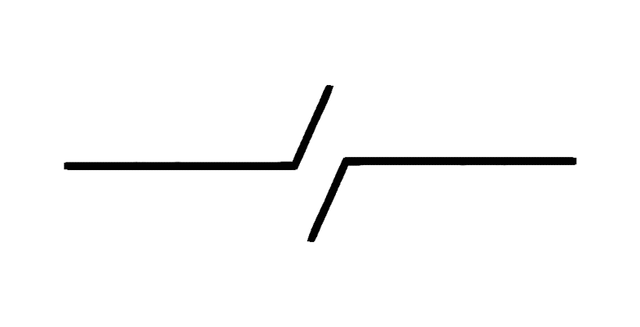
A symbol could be useful for affirmation and community support. Just as the semicolon symbol and ribbon symbols represent survival in the face of adversity, a symbol representing permanent exit from the parent-child relationship could help individuals assert their decision to leave; for example, expressing that their exit was a means of self-protection that cannot be overridden by their birth parents or any other third party. One possible candidate is the cut-off genogram symbol, which depicts a broken connection with lines diverging in opposite directions - a permanent exit where the individuals get further away as time goes on, as opposed to a temporary dispute or surmountable barrier. As a community symbol, it could find use in support groups, advocacy and NGOs. As a badge, flag or tattoo, it could assert "my parents no longer have ownership over my body; my body, my decisions and my life belong to me".
The term "ex-child", the cut-off symbol, and most importantly a legal process for no-fault unilateral revocation of parental rights could provide freedom and dignity to adult survivors of child abuse, coercive control and parental harassment. Survivors would no longer be seen as a child who is merely estranged and who is expected to eventually reunite, but as an adult who has consciously ended the parent-child relationship and is free to move forward without being treated as permanent property of another person.